W 628
W Series Stainless Steel Miniature Bearings
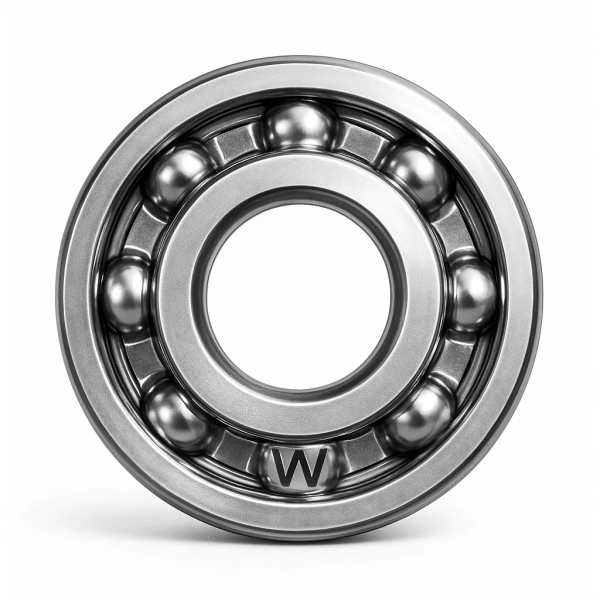

Image may differ from product. See technical specification for details.
Basic Information
Main Dimensions
Performance
Materials
Environment & Compliance
- Fast delivery
- Enjoy discounts on bulk purchases
- Secure Payment
- Fast Global Shipping
W 628 Bearing Product Overview & Core Advantages
The W 628 is a single row deep groove ball bearing designed for high performance in compact spaces. Engineered from stainless steel throughout, it offers excellent corrosion resistance and is suitable for a wide operating temperature range. Its primary strength lies in handling radial loads efficiently, making it an ideal choice for applications demanding reliability and precision. The open design allows for versatile lubrication options, while the P0 tolerance class ensures consistent quality and performance, suitable for a broad spectrum of industrial uses.
W 628 Bearing Model Code Explained, Specifications & Naming Convention
The model designation W 628 follows a standard industry numbering system. Here is a breakdown of its key identifiers:
- W: Indicates a series of miniature and instrument bearings.
- 6: Denotes the series, typically relating to the bearing's cross-section and load capacity.
- 28: Specifies the bore diameter. In this case, a bore of 8 mm.
- No Seals / Open: The absence of a suffix indicates an open (unsealed) bearing, allowing for high-speed operation and custom lubrication.
- No Cage Suffix: The standard cage material is stainless steel.
W 628 Bearing Structural Features & Performance Benefits
The W 628's performance is derived from its robust construction and material selection:
- Full Stainless Steel Construction: The rings, balls, and cage are manufactured from stainless steel, providing superior corrosion resistance and making the bearing suitable for harsh environments and washdown applications.
- High-Speed Capability: The open design and optimized internal geometry contribute to a high limiting speed of 45,000 rpm, enabling use in demanding, high-velocity scenarios.
- Precision & Reliability: Manufactured to P0 (Normal) tolerance class and standard CN radial internal clearance, this bearing ensures smooth operation, low noise, and consistent performance in precision assemblies.
- Versatile Lubrication: The open structure allows the bearing to be lubricated with a wide variety of greases or oils, tailored to specific application needs for temperature, speed, or life requirements.
W 628 Bearing Typical Application Areas
The W 628 miniature ball bearing is versatile and finds use in numerous precision industries and equipment, including:
- Precision Instruments: Optical encoders, measuring devices, and laboratory equipment.
- Small Electric Motors: High-speed spindles in dental handpieces, small fans, and miniature drives.
- Office Automation: Printers, scanners, and copiers.
- Medical Devices: Surgical tools and diagnostic equipment where corrosion resistance is critical.
- Robotics and Automation: Small joints, guides, and actuators in compact robotic systems.